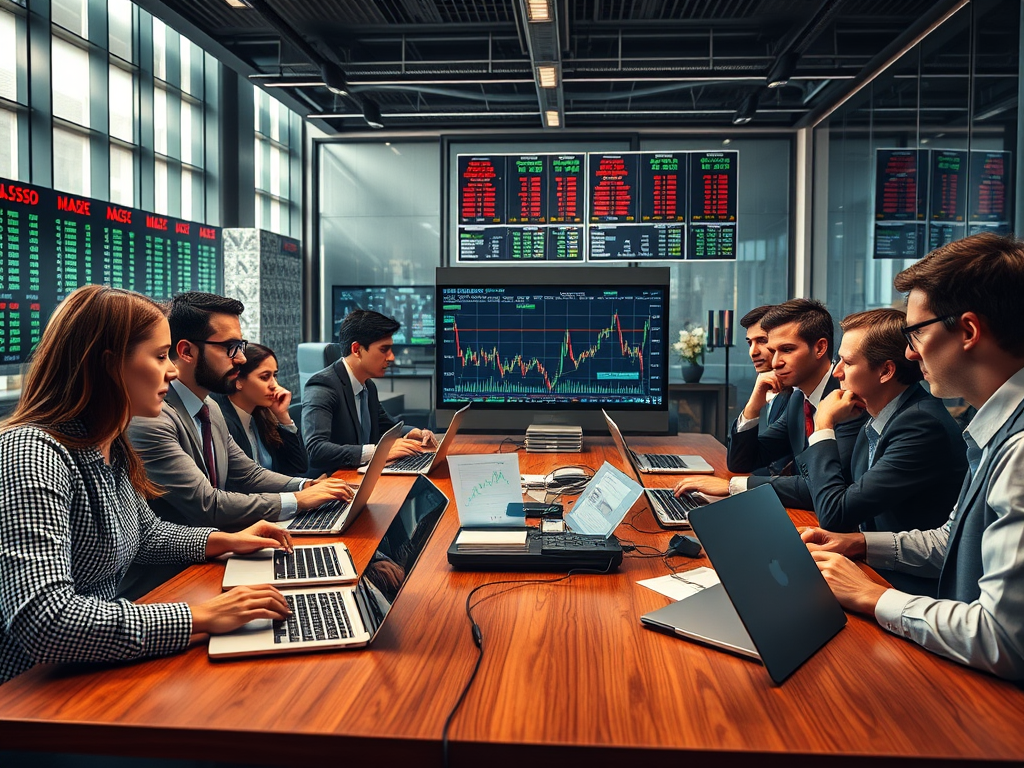
This year only 22% of active funds have beaten the market — the weakest showing in at least 26 years. Put differently: nearly 4 out of 5 professional managers underperformed simple index funds. That’s a seismic result, with immediate consequences for anyone who cares about returns, fees and the future of active management.
If you’ve ever wondered whether active management still makes sense — or whether there’s a better way to protect and grow your capital — read on. This is where professional experience, disciplined strategy and modern technology make the difference.
Why so many active managers failed this year
Several structural and tactical reasons explain the unusually poor win rate among active managers:
- Concentration & style risk. A few mega-cap names have dominated markets; managers underweighting those names faced big relative losses.
- Late-cycle rotation. Rapid sector rotations (tech → energy → AI → defensives) penalized managers who were slow to adapt.
- High fees vs. low edge. Fees drag performance—when alpha is hard to find, fees turn small advantages into net underperformance.
- Crowded trades & momentum. When everyone chases the same “winning” factor, marginal sellers lose.
- Macro surprise events. Geopolitics, rate signals, and liquidity shocks amplified dispersion in unpredictable ways.
- Behavioral mistakes. Selling winners too early, holding losers too long — emotional bias still eats returns.
The result: passive, low-cost index strategies beat the majority of professionally run funds. That’s not an indictment of all active managers — it’s a warning: traditional active management, alone, no longer guarantees outperformance.
What this means for you — and why doing nothing is costly
If your portfolio uses active funds by default (or pays high advisory fees without clear evidence of edge), you are likely paying for outcomes you aren’t getting. Over time the compound effect of underperformance plus fees is massive — especially for long-term goals like retirement or wealth transfer.
But the answer is not to abandon active management entirely. The real question is: how do you capture the upside of active selection while avoiding the traps that produced this 22% outcome?
The New Approach: Hybrid Investing — Data, Discipline, and Human Judgment
The future of superior investing is hybrid — combining:
- Low-cost core (passive) holdings to capture market returns.
- Tactical active sleeves where genuine edge exists (niche strategies, small caps, event-driven, commodities).
- AI-driven signals to process data, spot regime shifts, and reduce reaction lag.
- Human strategic oversight to interpret context, manage risk and make judgment calls when models aren’t decisive.
This is not theoretical — it’s how top-performing institutional portfolios are evolving. They don’t choose “active vs passive.” They build a system that uses each method where it works best.
How I turn this into a real, working strategy for my clients
I’m Rachel Miller Cole, a professional trader and market analyst. I work with investors across Central Europe, Canada, the USA and the UK to build resilient portfolios that combine institutional-grade tools with personalized goals.
Here’s my four-step process for navigating a world where 78% of active managers underperform:
1. Diagnostic — know exactly what you own
I audit your current holdings, fees, concentration risks and tax profile. Most investors are surprised how much hidden overlap or unnecessary cost exists.
2. Core + Tactical Architecture
- Core: Low-cost global index exposure (equities + bonds) to secure market beta.
- Tactical Active Sleeve(s): Carefully sized allocations to strategies with measurable edge — not “stock picking for the sake of it.” These sleeves target inefficiencies where active management historically adds value (e.g., small caps, event-driven, commodity producers, distressed opportunities).
3. AI-Augmented Signal Layer
I deploy machine learning models to:
- monitor macro regime shifts in real-time,
- identify anomalous flows and early rotation signals,
- screen and rank ideas using fundamental + alternative data.
AI speeds discovery; human judgment decides execution.
4. Discipline & Execution
We use staged entries (DCA), strict position sizing, and tactical hedges when volatility spikes. Performance is assessed against clear KPIs — net return, max drawdown, and risk-adjusted metrics.
Concrete example — how this would look in practice
For a balanced investor (illustrative only):
- 60% Core global equity index ETFs (low cost)
- 20% Fixed income / IG bonds / TIPS for stability
- 12% Tactical active sleeve (a mix of small-cap value, commodities producers, event-driven opportunities)
- 4% Opportunistic (private deals or pre-IPO access we screen)
- 4% Cash/liquidity buffer and hedges
Each active sleeve is sized to limit downside while offering asymmetric upside — and every holding is chosen because it passes both an AI signal filter and a human conviction test.
Why work with me — unique benefits you can’t get from passive alone
- Access to differentiated opportunities: I source boutique managers, private deal flow and thematic ideas that aren’t available through mainstream fund shelves.
- AI + human oversight: faster signal processing and better context than either alone.
- Transparent, fee-aware structuring: I optimize for net returns — the fee you pay is justified by measurable alpha or unique access.
- Tailored for your jurisdiction: tax-aware implementation for clients in Central Europe, Canada, the USA and the UK.
- Execution discipline: we implement staged buying, rebalancing rules and automatic risk triggers so you avoid behavioral mistakes.
I don’t promise miracles. I promise a repeatable, evidence-based process designed to outperform passive outcomes net of fees over a full market cycle.
Next step — how we start (simple and concrete)
If you’re tired of paying for active management that underdelivers, let’s do two things now:
- Reply with “PORTFOLIO REVIEW” — I’ll run a no-obligation audit of your current portfolio (fees, concentration, hidden risks) and return a 1-page diagnostic.
- If you like the audit, we’ll map a personalized Core+Tactical plan, including a staged entry schedule and risk controls tailored to your goals and location.
Markets change. Your approach should too. Don’t let 78% underperformance become your long-term outcome — adopt a smarter, hybrid strategy that combines the best of index investing, selective active management, AI insights, and human judgment.
—
Rachel Miller Cole
Professional Trader & Market Analyst
Helping investors in Central Europe, Canada, the USA and the UK build portfolios that work — not just perform in headlines. 🌍📊






 Rachel Cole - Blog
Leave a comment